


What Is Trauma-Informed Teaching? Strategies, Benefits, and Why It Matters in Today’s Classrooms
Learn what trauma-informed teaching is, why it matters, and practical strategies educators can use to improve student behavior, engagement, and outcomes.
What Is Trauma-Informed Teaching?
Walk into almost any classroom today, and you will see educators doing far more than delivering instruction. They are managing emotional escalations, rebuilding trust, and supporting students carrying experiences that extend far beyond the classroom.
Trauma-informed teaching is an approach that recognizes how trauma impacts learning, behavior, and relationships. Instead of asking, “What is wrong with this student?” educators shift to asking, “What happened to this student, and what do they need to feel safe enough to learn?”
This shift is not just philosophical. It changes how classrooms are structured, how discipline is approached, and how relationships are built.
Why Trauma-Informed Teaching Matters More Than Ever
Today’s students are navigating:
- Post-pandemic disruption
- Increased mental health challenges
- Exposure to violence, instability, and chronic stress
- Digital overstimulation and social pressure
Research on adverse childhood experiences (ACEs) shows that trauma is not rare. It is common. And when trauma is unaddressed, it directly impacts:
- Attention and focus
- Emotional regulation
- Memory and learning
- Classroom behavior
Without trauma-informed practices, educators are often responding to symptoms rather than causes.
Core Principles of Trauma-Informed Teaching
Trauma-informed classrooms are built on four foundational elements:
1. Safety
Students must feel physically, emotionally, and relationally safe before learning can occur.
2. Predictability
Consistent routines reduce anxiety and help regulate the nervous system.
3. Connection
Strong, stable relationships between students and educators increase engagement and trust.
4. Regulation
Students need support developing emotional regulation skills before they can consistently meet academic expectations.
This approach does not remove accountability. It creates the conditions where accountability becomes possible.
What Are Restorative Practices in Education?
One of the most effective applications of trauma-informed teaching is restorative practices in education.
Instead of focusing on punishment, restorative approaches focus on:
- Repairing harm
- Rebuilding relationships
- Restoring community
Schools that implement restorative practices often see:
- Reduced suspensions and expulsions
- Improved school climate
- Increased student engagement
- Stronger teacher-student relationships
Safety and belonging are not soft outcomes. They are academic drivers.
Practical Trauma-Informed Teaching Strategies
You do not need a new curriculum to begin. You need consistent, intentional practices.
1. Predictability with Warmth
Post daily agendas, preview transitions, and maintain consistent expectations.
2. Regulation Before Reasoning
When a student is escalated, logic will not land. Support regulation first, then address behavior.
3. Offer Dignity-Preserving Choices
Provide structured options that reduce power struggles while maintaining expectations.
4. Build Connection Intentionally
Greet students by name. Check in. Notice effort. Relationship is not extra. It is strategy.
5. Use Restorative Questions
Ask:
- Who was impacted?
- What needs to happen to repair the harm?
These questions shift the focus from punishment to responsibility.
The Overlooked Crisis: Teacher Mental Health
Trauma-informed teaching cannot exist without addressing teacher mental health.
Educators are experiencing:
- High levels of burnout
- Secondary traumatic stress
- Emotional fatigue from daily exposure to student challenges
When teachers are unsupported, the entire system feels it.
Trauma-informed schools must also be teacher-informed environments, where educators have:
- Psychological safety
- Practical tools
- Space to process their experiences
When educators are regulated, classrooms become more stable.
Trauma-Informed Teaching Is Not Optional
The reality is simple.
Students have changed. The world has changed. Classrooms must change too.
Trauma-informed teaching is not a niche strategy. It is a foundational approach for reaching students in today’s educational landscape.
Educators who adopt it are not lowering standards.
They are removing barriers so students can meet them.
Take the Next Step: Move From Reaction to Restoration
Understanding trauma-informed teaching is one step. Implementing it is another.
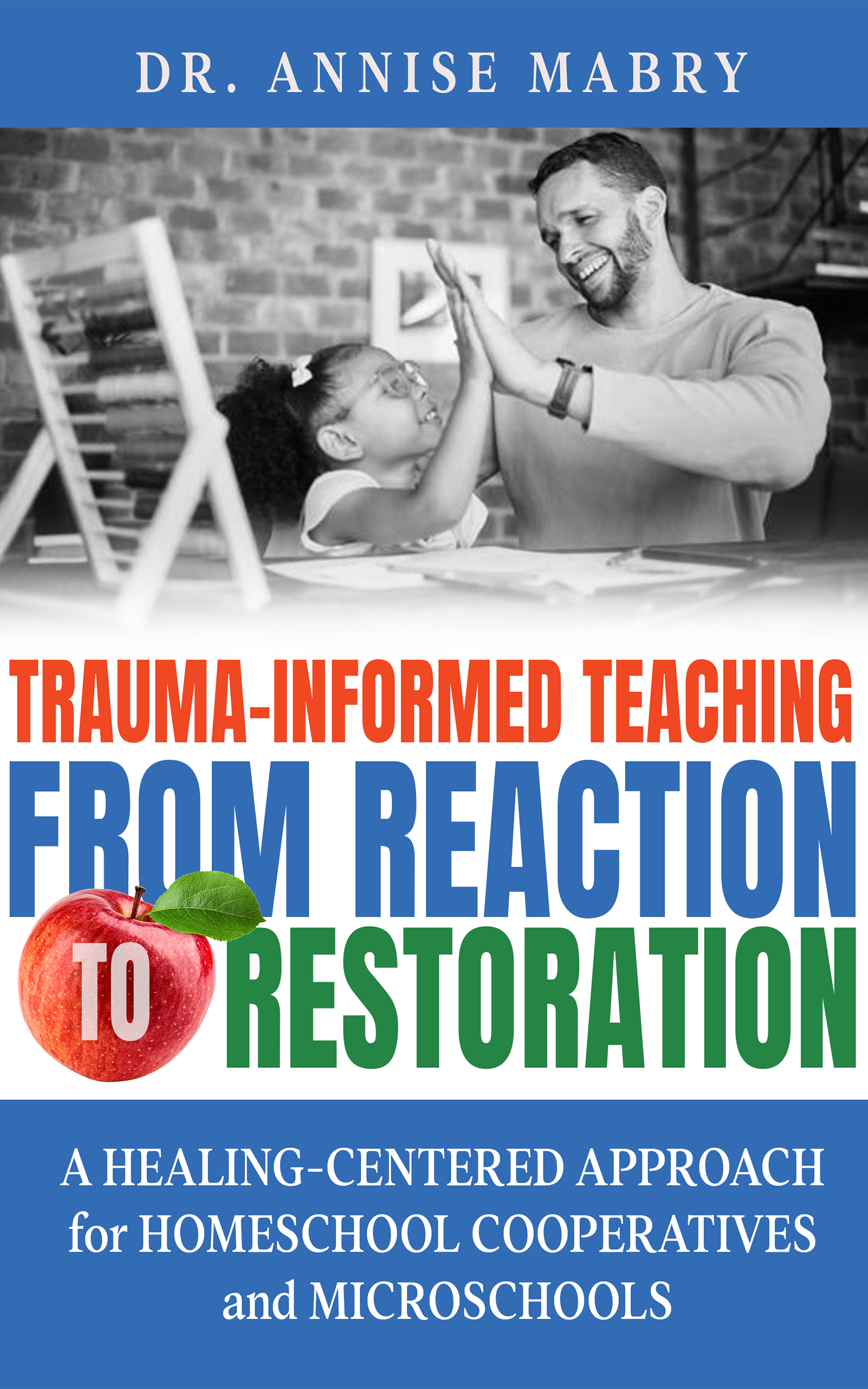
Dr. Annise Mabry’s book, Trauma-Informed Teaching: From Reaction to Restoration, provides a practical, real-world guide for educators working in homeschool cooperatives, microschools, and alternative education environments.
Inside, you will learn:
- How trauma affects the brain and behavior
- Why traditional discipline often fails vulnerable students
- How to build restoration-centered classrooms
- Practical strategies you can apply immediately
Get your copy on Amazon
Learn more about The Dr. Annise Mabry Foundation
FAQ: Trauma-Informed Teaching
What is trauma-informed teaching?
Trauma-informed teaching is an approach that recognizes how trauma impacts student behavior and learning, and adjusts classroom practices to prioritize safety, connection, and regulation.
Why is trauma-informed teaching important?
It improves student engagement, reduces behavioral issues, and creates a classroom environment where students feel safe enough to learn.
What are examples of trauma-informed strategies?
Examples include predictable routines, emotional regulation support, restorative conversations, and relationship-building practices.
How does trauma affect learning?
Trauma can impact memory, attention, emotional regulation, and a student’s ability to feel safe in a learning environment.
Final Note
Trauma-informed teaching is not about doing more.
It is about responding differently.
Because when students feel safe, seen, and supported,
learning is no longer a fight.
It becomes possible.
No Comments
Sorry, the comment form is closed at this time.